
Public Sector. Public money, defensible energy decisions
Procurement-ready engineering and independent verification, so every rand spent on energy stands up to audit.
Book a ConsultationEnergy Performance Certificates for public buildings
South African regulations require publicly owned buildings with a net floor area above 1,000 square metres to obtain and publicly display an Energy Performance Certificate, where the building is used as an office, a place of assembly or a place of instruction. The threshold for privately owned buildings is 2,000 square metres, so public buildings carry the obligation at half the floor area. The compliance deadline was 7 December 2025 and has passed.
Non-compliance carries penalties of up to R5 million, imprisonment of up to five years, or both. Reported compliance across public buildings remains low, which means a substantial number of qualifying offices, halls and places of instruction are currently outside the system.
Obtaining a certificate requires twelve months of metered consumption data for the building and an assessment against the benchmark for its type by an accredited body. Where a building has no reliable metering history, closing that gap is the first piece of work rather than the last.
Delta Carbon supports public buildings through the Energy Performance Certificate process, from consumption data through to certification.
How the work gets funded without a capital budget
An Energy Services Company model funds an energy project from the savings it produces rather than from the entity's capital budget. Delta Carbon designs, funds and installs the work, the saving on the electricity account covers the charge, and the entity does not carry an upfront capital cost. Delta Carbon is a SANEDI-registered Energy Services Company.
How it works in practice:
Establish the baseline
We measure what the facility currently consumes and what it costs, so the saving can later be proven against a documented starting point rather than asserted.
Deliver the work
Efficiency retrofits, solar PV, battery storage or a combination, sized to the building's actual load rather than to a standard specification.
Verify the saving
Independent measurement and verification confirms the reduction against the baseline, which is what makes the payment arrangement auditable and what an oversight body will ask to see.
Where public sector energy cost concentrates
Across most public estates the cost sits in a small number of places, and the highest-value work is usually the least visible.
Buildings
Offices, halls, schools and clinics are dominated by lighting, HVAC and hot water, which are the same three interventions that work across commercial property and have the most predictable results.
Water and wastewater
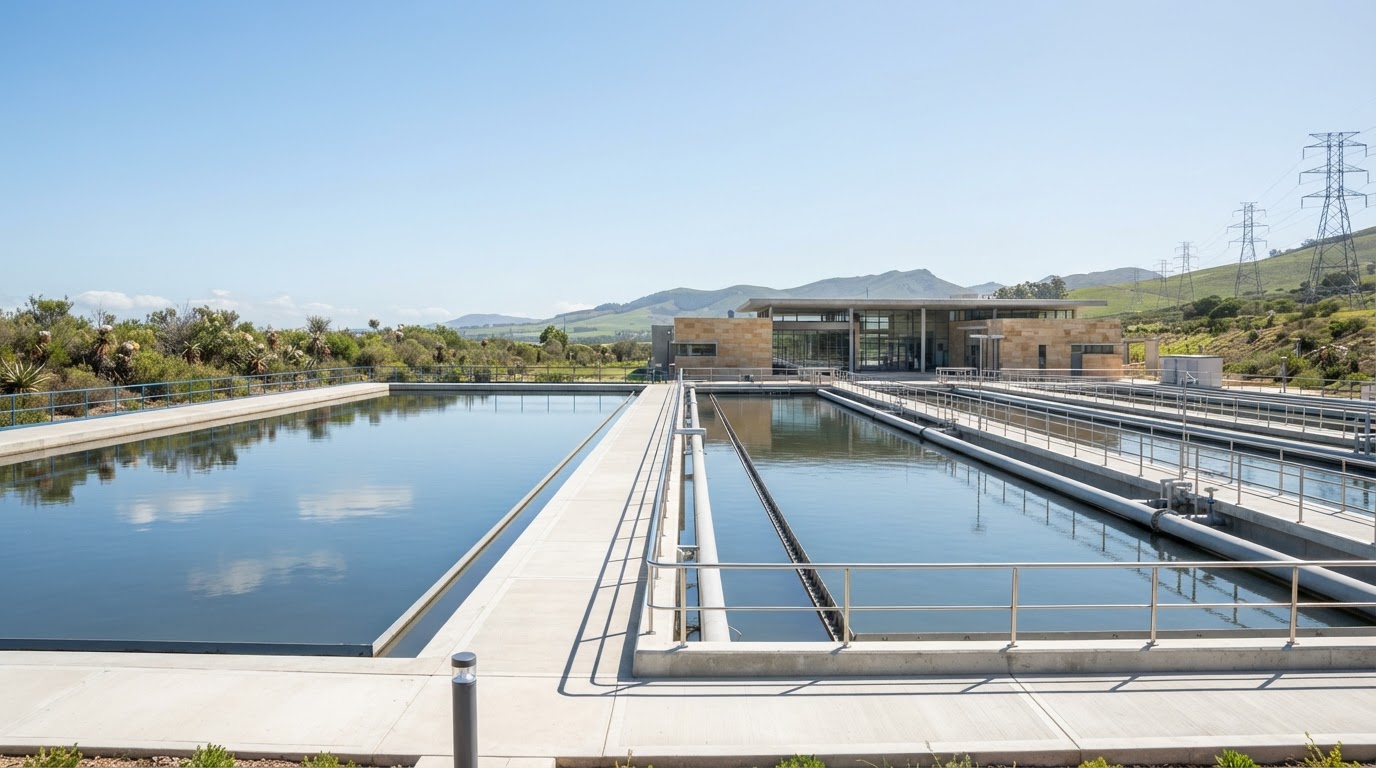
Pumping is frequently the single largest electricity account an entity holds. Pump efficiency, control and scheduling against tariff periods reduce cost without reducing service.
Public lighting
Street and area lighting runs on a fixed schedule regardless of use, which makes it a straightforward consumption reduction once the fittings and control are addressed.
Continuity of essential services
For clinics, water pumping and emergency facilities, an outage is a service failure rather than an inconvenience. Battery storage and solar change that calculation from a saving into a continuity decision.
What we do for public entities
Establish the position and the plan
An energy and emissions baseline across the estate, then a costed plan that sequences facilities by opportunity and by obligation, so limited capacity goes to the buildings where it counts. Where an entity carries climate reporting commitments, the plan and the disclosure use the same data.
See decarbonisation roadmaps→Deliver without capital outlay
Efficiency retrofits on lighting, HVAC and hot water, pump efficiency work, and solar PV with battery storage, delivered as an engineering project or funded from savings through a financing partner where budget is constrained.
See solar services→Evidence for oversight
Independent measurement and verification of every saving claimed, Energy Performance Certificate support, and bill verification against municipal accounts, which regularly identifies tariff misallocation and metering errors that have been paid without question.
See bill verification and performance monitoring→Every figure Delta Carbon reports is independently verified, which is the standard an auditor, an oversight committee or a funder will apply to it.
Proven in the public sector
Delta Carbon's ESG strategy and decarbonisation roadmap work spans listed corporates, healthcare, logistics and mining clients. Performance monitoring and energy efficiency work, including a national building energy performance dashboard, has been delivered for industrial, government and commercial clients. Carbon credit project development and feasibility work includes projects for local government.
Schools and places of instruction
Schools sit in the Energy Performance Certificate regulations as places of instruction, and a school above the public threshold carries the same obligation as a government office. Many also carry an electricity account that has grown well beyond what the governing body budgeted for.
The same funding structure applies. Efficiency work and rooftop solar can be delivered without a capital contribution where the saving supports it, and the saving is verified rather than estimated, which matters when a governing body has to account for the arrangement.
Delta Carbon works actively across the Southern Cape, including Mossel Bay and George, alongside its national practice.
Start with the buildings that carry an obligation
A consultation establishes which facilities need an Energy Performance Certificate, where the electricity cost concentrates across the estate, and how the work could be funded from savings rather than capital. If you have buildings above the threshold with no certificate on display, that is the right place to start.